
Hong Kong Bird Watching Seasons: The Best Months & What You'll See
If you want to know the single best time to go bird watching in Hong Kong, the answer is simple: the months between autumn and the next spring. That is when the migrants arrive, when the wetlands fill up, and when the bird numbers are at their highest. Winter is the peak. The Agriculture, Fisheries and Conservation Department (AFCD) puts it plainly in its bird-watching guide — the best time here is the months between autumn and the next spring, and bird numbers build to a maximum in winter.
Why the season matters so much comes down to one thing: Hong Kong is a major stopover and wintering site on the East Asian–Australasian Flyway, the migration route birds follow between their breeding grounds in the north and their wintering grounds in the south. As far as bird watching goes, this small territory is an outstanding place to witness migration: you can watch the make-up of the birdlife change from month to month, not just from place to place.
🐦 Hong Kong's birding year at a glance
Best months: the months between autumn and the next spring (AFCD)
Peak: winter, when numbers are highest
Biggest spectacle: Deep Bay, where some 60,000 birds make their annual winter migration to roost
Signature winter bird: the Black-faced Spoonbill, which winters in the Deep Bay area
Two migration windows: passage migrants pass through in spring and in autumn
Quietest period: summer — but the breeding birds are worth the trip
Why Hong Kong has seasons of birds
Hong Kong sits on the southern coast of China, roughly midway along the East Asian–Australasian Flyway, in a sub-tropical monsoon climate that produces an unusual range of habitats — wetlands, woodlands, shrublands, farmland and coast — packed into a tiny area. That combination is what makes the territory so bird-rich: more than 580 bird species have been recorded here, about 40% of all the species found in mainland China, or roughly 5% of the global total.
Because it is on a flyway, Hong Kong's birdlife is not the same all year. Some birds live here the whole year. Others fly south to spend the winter here and return north to breed in spring. Others still are simply passing through, stopping briefly on their way south or north. So the species you can expect change season by season — and the whole rhythm of the year is driven by migration.
The four kinds of birds you will meet
AFCD classifies Hong Kong's birds by migratory habit, and that classification is the key to planning a visit:
- Resident species — about 20%. Birds that live and breed here their entire lives. Familiar examples include the Eurasian Tree Sparrow, Oriental Magpie-Robin, Fork-tailed Sunbird, Black-crowned Night Heron and Red-whiskered Bulbul in the city, White-throated Kingfisher and Little Egret in the wetlands, and the Japanese Tit and Swinhoe's White-eye in the woodlands. These are the birds you can see in any season.
- Winter visitors — about 30%. Birds that leave their northerly breeding grounds before the winter food shortage, spend the season in the sub-tropics, and fly back north to breed in spring. They are the reason winter is the peak season.
- Passage migrants — about 40%. Birds that pass through Hong Kong in spring and autumn, staying only briefly before continuing their long journey. They include raptors, waders and passerines such as the Chinese Sparrowhawk, Spoon-billed Sandpiper and Brown Shrike.
- Summer visitors — about 5%. Birds that breed in Hong Kong and then fly south for the winter. In the eastern waters, the Bridled Tern, Roseate Tern and Black-naped Tern breed on remote islands; in woodland, the Hainan Blue Flycatcher and Chestnut-winged Cuckoo are heard and seen in summer; and the Yellow Bittern breeds here between May and August.
Alongside these, roughly 5% of Hong Kong's records are vagrant or occasional visitors — birds whose range only just touches the territory, or that stray far off course.
The birding year at a glance
The table below turns that classification into a season-by-season plan. It describes the recurring pattern of the year, not any single year's dates: migration timing shifts a little with the weather, so treat the months as windows rather than fixed appointments.
| Season | Months | What's happening | Where to point your binoculars | One bird to look for |
|---|---|---|---|---|
| Autumn passage | Sep–Nov | Southbound passage migrants stop over briefly on the way south | Wetlands and hillsides along the flyway | Brown Shrike |
| Winter — the peak | Dec–Feb | Numbers at their highest; winter visitors settle in for the season | The Deep Bay wetlands — Mai Po, Tsim Bei Tsui, Nam Sang Wai — and the woodlands | Black-faced Spoonbill |
| Spring passage | Mar–May | Northbound passage migrants pass through; the first summer visitors arrive | Wetlands, woodland and freshwater marshes | Spoon-billed Sandpiper |
| Summer | Jun–Aug | Quietest period, but the breeding season is under way | Remote eastern islands and mature woodland | Bridled Tern |
Winter: the peak season
If you can choose only one time of year, choose winter. This is when Hong Kong's wetlands are at their most dramatic: WWF-Hong Kong describes some 60,000 birds making their annual winter migration to roost in Deep Bay — one of the great wildlife spectacles in the region. Mai Po Nature Reserve, which WWF has managed since 1983, is the heart of it, with a high diversity of wetland habitats — gei wai (the traditional inter-tidal shrimp ponds), mangroves, intertidal mudflats and reedbeds — that make it an important habitat and staging site for waterbirds. The Mai Po and Inner Deep Bay area has been recognised as a Wetland of International Importance under the Ramsar Convention since 4 September 1995.
The bird most people come for is the Black-faced Spoonbill, a globally endangered species that is a common winter visitor to the Deep Bay area, with Mai Po and Deep Bay its major overwintering habitat in Hong Kong. The species is the subject of an international census carried out each January, with results released in spring. The most recent census on record, for winter 2025, counted a global population of 7,081 birds — the first time the total has passed 7,000, and a 1.3% increase on the winter before — of which 328 were counted in Deep Bay, a decline of 12.5% (47 birds) from the 375 recorded the previous winter. That Deep Bay decline is a reminder that this is a conservation species, not a guaranteed sighting; the count describes a winter that has passed, not a forecast.
Winter is also a good time for woodland birding. AFCD notes that Lung Fu Shan Country Park on Hong Kong Island has dense woodlands suited to winter visitors such as the Grey-backed Thrush, Japanese Thrush, Asian Stubtail Warbler and Yellow-browed Warbler, while Shing Mun attracts different thrushes and warblers in winter.
Spring and autumn: the passage seasons
The two migration windows are the seasons to watch for passage migrants — the 40% of Hong Kong's species that pass through in spring and autumn and stay only a short while before continuing their journey. Because they are on the move, they are the birds that make each visit different, and they are the reason birders keep coming back through the year.
The flagship is the Spoon-billed Sandpiper, one of the world's most threatened shorebirds and a passage migrant through Hong Kong, along with raptors and passerines such as the Chinese Sparrowhawk and Brown Shrike. Tai Mo Shan is another good watch-point for migratory species in these months, where AFCD lists species such as the Grey-faced Buzzard, Brown Shrike, Blue Rock Thrush and Asian Brown Flycatcher. Passage timing depends on the weather, so the best advice is to watch the season, not the calendar.
Summer: quiet, but not empty
Summer is the lull in Hong Kong's birding year — the winter crowds are gone and the passage migrants have moved on — but it is the breeding season, and a handful of species are here only now. In the eastern waters of Hong Kong, the Bridled Tern, Roseate Tern and Black-naped Tern breed on remote islands; in woodland areas, the Hainan Blue Flycatcher and Chestnut-winged Cuckoo are often heard and seen; and the Yellow Bittern breeds here between May and August. For a visitor who is in Hong Kong in summer, these are the birds to look for.
Birds to look for by season
Every species below is named on AFCD's own pages for Hong Kong. Use it as a starting list, not a checklist.
| Group | Share of Hong Kong's birds | Examples | When |
|---|---|---|---|
| Residents | about 20% | Eurasian Tree Sparrow, Oriental Magpie-Robin, Red-whiskered Bulbul, Little Egret | all year |
| Winter visitors | about 30% | Black-faced Spoonbill, Grey-backed Thrush, Yellow-browed Warbler | Dec–Feb (arrive in autumn, leave in spring) |
| Passage migrants | about 40% | Chinese Sparrowhawk, Spoon-billed Sandpiper, Brown Shrike | spring and autumn |
| Summer visitors | about 5% | Bridled Tern, Hainan Blue Flycatcher, Yellow Bittern | summer (Yellow Bittern May–Aug) |
| Vagrant / occasional | about 5% | rare, unpredictable strays — a matter of luck | any time |
Watching birds responsibly
Two rules cover most of it. First, the law: all wild birds in Hong Kong are protected by the Wild Animals Protection Ordinance (Cap. 170). Anyone who wilfully disturbs, takes, removes or injures wild birds, or their nests and eggs, commits an offence and is liable to a maximum fine of HK$100,000 and imprisonment for one year. In the breeding months especially, keep well away from nests. Second, the site rules: Mai Po Nature Reserve is not a free-roaming public park — visitors must join a WWF public guided eco-visit or apply for a permit, and the guided route follows a designated trail through the gei wai, boardwalk and birdwatching hides.
AFCD's other tips are the same ones that work everywhere: wear subdued colours and avoid red, yellow and orange; walk quietly and keep your distance from birds and nests; never disturb habitats; never spotlight nocturnal birds; be considerate of farmers, landowners and other users; and do not rush — spotting even a few common species makes a good day.
Plan your trip around the season
Season decides what you will see; the site decides how close you can get to it. If you are planning your first Hong Kong birding trip, start with our companion guide, where to go bird watching in Hong Kong, which lists the best wetlands, woodlands, open-access hotspots and free city parks, with access and transport for each. For the trip itself, see how to get around and opening hours.
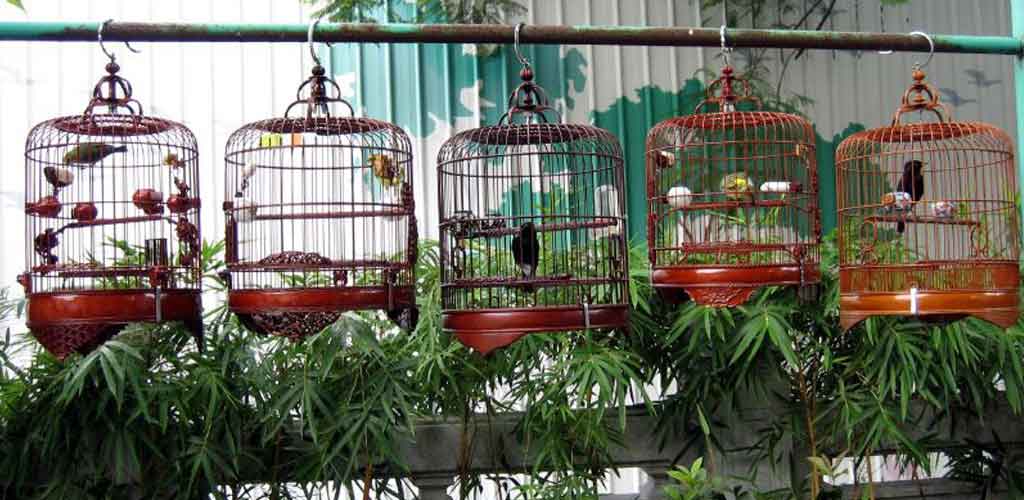
And a note that matters to this site in particular: the Yuen Po Street Bird Garden in Mong Kok is a caged-bird market for songbirds such as the red-whiskered bulbul and white-rumped shama — it is a wonderful piece of living Cantonese culture, but it is not wild bird watching and it has no migration season. Wild bird watching is the birds that live in, or pass through, Hong Kong's parks, wetlands and woodlands; this page and the companion guide cover that wild-bird side of the city.
Related guides
- Bird watching in Hong Kong: the best spots, parks and reserves — where to go for each season
- Yuen Po Street Bird Garden: the complete guide — the market, its culture and its songbirds
- How to get to the Yuen Po Street Bird Garden
- Yuen Po Street Bird Garden opening hours
Sources
The figures in this guide are from these official pages, checked in October 2026: AFCD — Birds in Hong Kong, Birds of Hong Kong and Bird watching in Hong Kong, plus AFCD's Watching Birds leaflet; WWF-Hong Kong — Mai Po Nature Reserve; and the Hong Kong Bird Watching Society — 2025 International Black-faced Spoonbill Census. The census figure describes the most recent winter census on record, not a forecast. Where an official source does not publish a figure, this guide omits it rather than estimating.